| Length: 7.5 inches | Wingspan: 9 inches | Seasonality: All Seasons |
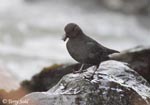
| ID Keys: Dark gray chunky body, distinctive in habitat | ||
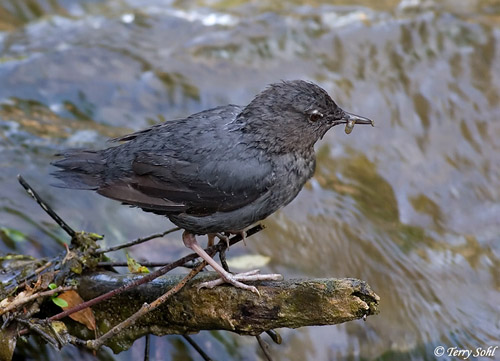 American
Dippers are a very unique bird of the
cold, fast streams in the Black Hills of South Dakota and western areas of North
America. American Dippers feed on insects
found on stream bottoms, swimming underwater to depths of up to 20 feet and even
walking on the stream bed. They often nest on the underside of bridges over
mountain streams.
American
Dippers are a very unique bird of the
cold, fast streams in the Black Hills of South Dakota and western areas of North
America. American Dippers feed on insects
found on stream bottoms, swimming underwater to depths of up to 20 feet and even
walking on the stream bed. They often nest on the underside of bridges over
mountain streams.
Habitat:
Fast, clear, cold mountain streams, typically with a combination of a rocky bottom and overhangs and nearby crevices suitable for nesting.
Diet:
Aquatic insects, snails, small fish, worms
Behavior:
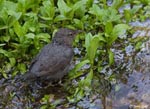
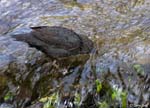
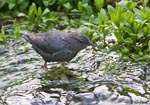
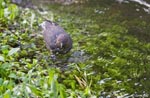
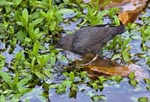
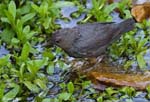
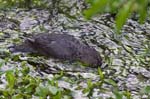
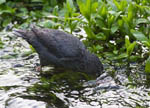
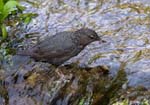
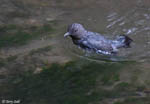
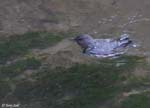
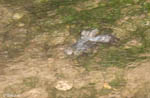
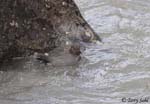
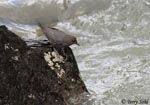
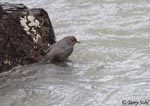
Forages by catching food underwater, by either submerging its head and probing crevices or flipping over rocks, or walking underwater on the stream bottom. They will also occasionally pluck food items from the water's surface, or feed on insects along stream banks. Photos of many of these behaviors can be seen at the bottom of the page.
Nesting:
May through July in South Dakota. The nest is built near fast water in a protected location such as a cliff ledge, behind a waterfall, or often nowadays, underneath a bridge. The nest is a multi-layer globe shape, with an outer shell of mosses and an interior of dry grasses, keeping the interior of the nest dry even when the nest is placed in moist locations. The female lays between 3 and 6 eggs, and she alone incubates them. They hatch after about two weeks, and the young fledge from the nest about 25 days after hatching.
Interactive eBird Map:
Click to access an interactive eBird map of American Dipper sightings
Song:
Shrill zzzeet calls. They also have a long rich song. Click here to hear the song of an American Dipper1. Click here to hear the call of an American Dipper2.
Migration:
Permanent resident throughout its range. However, some birds may move short distances in the winter in a search for open water.
Conservation Status:
Local in the Black Hills only in South Dakota. Often referred to as an "indicator" species, due to its need for fairly pristine conditions. The presence of American Dippers generally infers very good water quality. They have declined through many parts of their range due to declines in water quality. However, overall populations are strong, and they are found across a very broad geographic area. With many populations in remote areas that are relatively undisturbed by human activity, populations trends are considered stable, and the IUCN considers the American Dipper to be a species of 'least concern'.
South Dakota "Hotspot":
The best bet to find an American Dipper in the state is Spearfish Creek in Spearfish Canyon. Try below Roughlock Falls, as there is typically a nesting pair just below the falls. Rapid Creek also generally has American Dipper populations, sometimes even within the city limits of Rapid City.
Further Information:
3) Audubon Guide - American Dipper
Photo Information:
July 8th, 2008 - Below Roughlock Falls in the Black Hills - Terry Sohl
Additional Photos:
Click on the image chips or text links below for additional, higher-resolution American Dipper photos
Audio Clip Credits:
1Ted Floyd, XC460527. Accessible at www.xeno-canto.org/460527
2Dan Lane, XC216644. Accessible at www.xeno-canto.org/216644
| Click on the map below for a higher-resolution view |
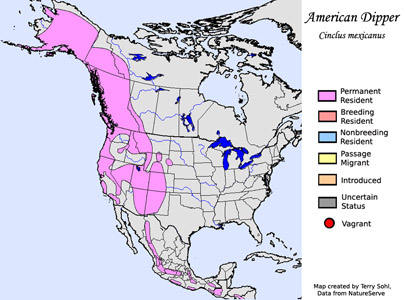 |
| South Dakota Status: Uncommon permanent resident in the Black Hills |
Additional American Dipper Photos
Click for a higher-resolution version of these photos
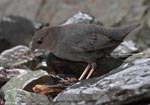
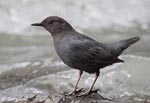
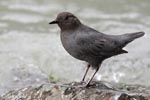

ALL PHOTOS COPYRIGHTED. Click below if you have interest in any of these photos for:
| Commercial Use |
| Fine Art Print |
| Personal Usage |
SOUTH DAKOTA BIRDS AND BIRDING - LOCATIONS OF WEBSITE VISITORS
Please mail all comments/suggestions/gripes/complaints to: Dakota Birder
Click here for other references used to compile this page