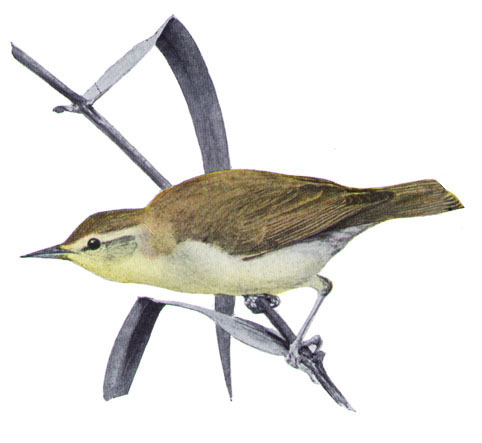
ID Keys: Plain brownish overall, darker on upperparts, pale plain
underparts, rufous crown and dark eye line
The
Swainson's Warbler is a rather plain warbler of the southeastern United
States. With their preference for lush or swampy bottomland hardwood
forests and behavior of skulking and foraging through thick vegetation, they
are a species that is more often heard than seen clearly. Numbers have
declined in the U.S. in recent decades due to habitat loss.
Fragmention of their forested habitats also increases "edge" habitat
preferred by Brown-headed Cowbirds,
and thus increases incidents of nest parasitism by Cowbirds of Swainson's
Warbler nests.
Habitat
During the summer breeding season,
Swainson's Warblers are found in swampy bottomland forests in the
southeastern U.S. or in lush forests of the Appalachians. Typically found in
areas with significant brushy undergrowth.
Diet
Feeds on insects and spiders.
Behavior
Foraging is most often done by walking
along the ground, using it's relatively thick and strong bill (for a
warbler) to probe the ground or flip over leaves in search of insects and
insect larvae. They will also ocassionaly capture flying insects in
mid-air.
Nesting
The nest is built of vegetation such as
leaves, grasses, and sticks, lined with softer mosses, lichens, or evergreen
needles. It is typically placed near water, fairly low to the ground,
in a thicket next to a more open area. The female alone builds the
nest and incubates the eggs, but the male will feed the female while
incubating, and both parents will help to feed the young.
Song
Song of the Swainson's Warbler is a series
of clean slurred phrases with strong ending.
Migration
Summers in the southeastern United
States. Winters in the Caribbean and the Yucatan of Mexico.