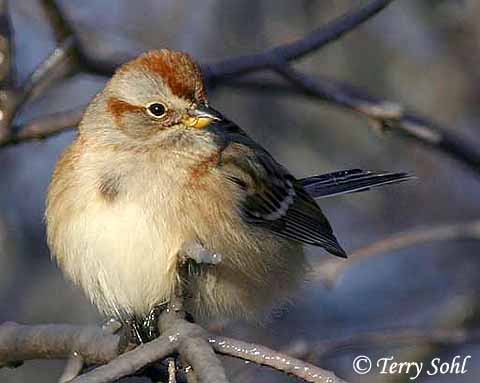
The American Tree Sparrow is a hardy (and cute!) sparrow of northern tundra regions that becomes a familiar winter visitor across much of the central and eastern United States, including South Dakota. Recognized by its rusty cap, gray face, dark central breast spot, and bicolored bill, this species is often seen feeding in small flocks in brushy fields, shelterbelts, and weedy edges during colder months. Despite its name, the American Tree Sparrow spends much of its time foraging on the ground for seeds and insects, flushing into nearby shrubs when disturbed. Its soft musical calls and cheerful winter presence make it a favorite among birders during the quiet months of the year.
Habitat
In South Dakota, American Tree Sparrows are primarily found during migration and winter in brushy shelterbelts, weedy farm fields, overgrown grasslands, woodland edges, and shrubby areas along rivers and wetlands where dense cover and seed-producing plants are available. Overall across their range, they breed in open Arctic and subarctic tundra with scattered shrubs and willow thickets, then winter farther south in brushy fields, hedgerows, forest edges, and other semi-open habitats rich in grasses and weed seeds.
Diet
American Tree Sparrows feed primarily on seeds of grasses, weeds, and other small plants, especially during fall and winter when they often forage on the ground beneath shrubs and dense cover. During the breeding season they consume more insects and spiders—including beetles, caterpillars, and flies—which provide important protein for both adults and developing young.
Behavior
Prefers foraging along the ground or relatively low in the vegetation, often in small flocks, sometimes in mixed flocks with other species.
Song
Clear warbles that descend throughout the song. The call is a muffled teedeloo.
Migration
American Tree Sparrows breed during summer across the Arctic and subarctic tundra of northern Canada and Alaska, where they nest among low shrubs and open tundra vegetation. In winter they migrate south into the northern and central United States, including South Dakota, occupying brushy fields, woodland edges, shelterbelts, and weedy grasslands until returning north in spring.Interactive eBird Map
Click here to access an interactive eBird map of American Tree Sparrow sightings
Similar Species
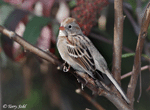
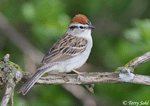
Field Sparrow, Chipping Sparrow. The American Tree Sparrow is a winter visitor with a rusty cap, gray face, dark central breast spot, and a distinctly bicolored bill, typically found in brushy fields and weedy edges during colder months. The Chipping Sparrow is slimmer and more urban-friendly, showing a bright rusty crown, crisp black eye line, and plain gray underparts during breeding season, often around yards, parks, and open woodlands. Field Sparrows are softer-looking birds with a pink bill, warm buffy face, and unstreaked pale underparts, favoring shrubby grasslands and overgrown fields where their sweet, accelerating song is commonly heard in spring and summer.
Bird Feeders
American Tree Sparrows will attend feeders for millet and other seeds.
Conservation Status
American Tree Sparrows remain widespread and are still considered fairly common across their northern breeding range, but long-term survey data indicate gradual population declines that have raised moderate conservation concern among bird organizations. The primary threats include climate-driven changes in Arctic and subarctic breeding habitats, along with habitat loss and degradation of shrubby grasslands and weedy wintering areas used throughout the central and eastern United States. The IUCN considers the American Tree Sparrow to be a species of "Least Concern".
Further Information
- eBird - American Tree Sparrow
- Audubon Field Guide - American Tree Sparrow
- Cornell All About Birds - American Tree Sparrow
Photo Information
January 2nd, 2005 -- Outdoor Campus in Sioux Falls -- Terry Sohl.
