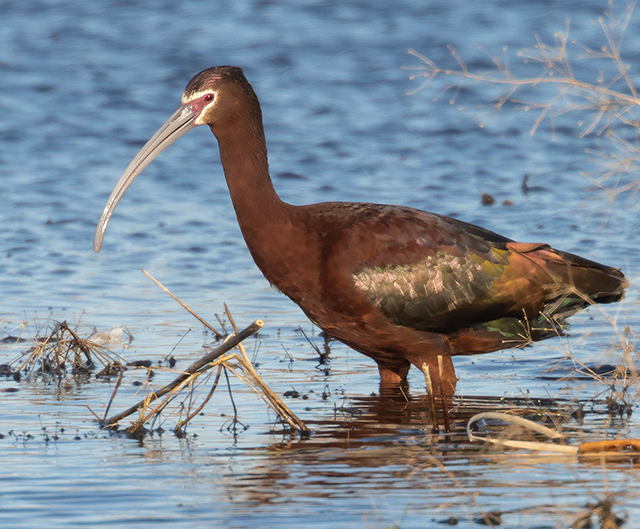
The White-faced Ibis is the Ibis most commonly found in South Dakota. It is very similar to the Glossy Ibis, but the two species ranges are generally distinctive. Where they do overlap, intermediates (possibly hybrids) can make positive identification nearly impossible. Like many birds, DDT was thought to contribute to poor nesting success for White-faced Ibis, caused a sharp decline in populations during the mid to late 20th century, but numbers have rebounded since. They also appear to be expanding their range to the north, and are perhaps more common in some parts of South Dakota than they were historically.
Habitat
The White-faced Ibis inhabits shallow freshwater marshes, flooded wetlands, wet meadows, mudflats, irrigated fields, and prairie lakes with abundant emergent vegetation. It prefers areas with shallow water for probing and nearby dense cattails or reeds for nesting colonies.
Diet
The White-faced Ibis feeds mainly on aquatic insects, crayfish, snails, frogs, small fish, and other invertebrates captured by probing its long curved bill into mud or shallow water. It also forages in wet fields and flooded grasslands for earthworms, beetles, and other small prey.
Behavior
Forages in shallow water, probing for food items in the muddy bottom. They will also take insects and other prey from the water's surface, or by foraging on dry land.
Nesting
June and July. Colonial nesters, with many birds nesting in one location, sometimes sharing a colony with other wading birds. The nest of a White-faced Ibis is a raised platform with a depressed center, built of cattails and other marsh vegetation, lined with grasses and finer vegetative material. Both sexes help build the nest, placing it in thick wetland vegetation (such as cattail or bulrush), in a waterside bush or small tree, or sometimes on the ground in highly protected areas like an island. Between 2 and 5 eggs are laid, with both sexes helping to incubate them. The young hatch after about 3 weeks, and fledge from the nest after about another 3 or 4 weeks.
Song
The call of a White-faced Ibis is a nasal sound, almost like a quack.
- 1Click here to hear the calls of a pair of White-faced Ibis taking flight
- 2Click here to hear the calls of a flock of White-faced Ibis taking flight
- 3Click here to the alarm calls of a White-faced Ibis
Migration
Summers in scattered locations throughout the central and western United States. Winters in California, Arizona, the Gulf Coast, and points south.
Interactive eBird Map
Click here to access an interactive eBird map of White-faced Ibis sightings
Similar Species
The White-faced Ibis is the only Ibis species that is commonly found in South Dakota. However, there are a couple of other birds typically found much further south that may rarely stray to the state
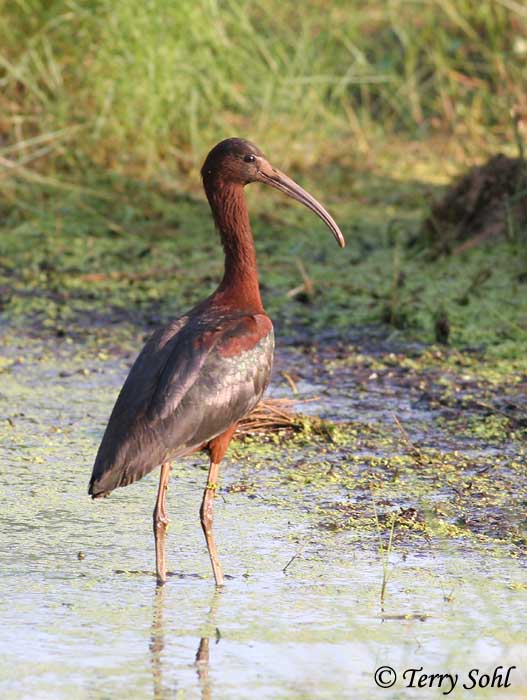
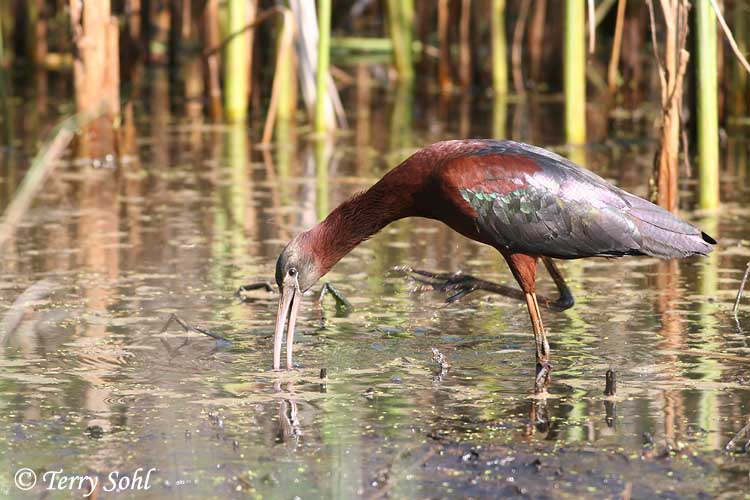
- Glossy Ibis. Glossy Ibis are normally found near the Gulf and Atlantic coastlines of the United States. However, they do occasionally stray into South Dakota, most often as a lone bird intermingling with White-faced Ibis. In adult breeding plumage, they can be differentiated from White-faced Ibis by the lack of a complete white facial ring that extends backwards behind the eye. The legs of a Glossy Ibis are also typically a grayish color, while they're reddish on a White-faced Ibis. Eye color is also different (although it's often very difficult to judge in field conditions). The eye of a Glossy Ibis is dark, while it's reddish on a White-faced Ibis. For birds in non-breeding plumage or juvenile birds identification is extremely difficult. White-faced Ibis lack the trademark white face in non-breeding plumage, and thus eye color is often the best way to differentiate the species.
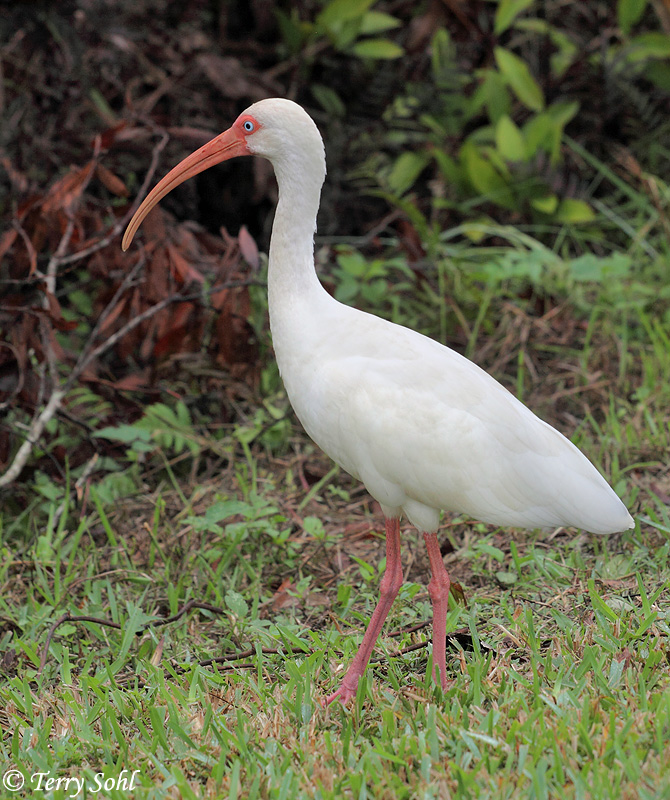
- White Ibis. White Ibis are another species normally found near the Gulf and Atlantic coastlines of the United States. They are an extremely rare visitor to South Dakota, substantially less common a visitor than even the Glossy Ibis. In their adult plumage they are unmistakable, with a white overall plumage that easily differentiates them from White-faced (or Glossy) Ibis. Juvenile birds are brownish overall and could potentially be confused with a White-faced Ibis if not seen well. However, juvenile White Ibis have light underparts (dark on a White-faced Ibis). They also are duller overall, lacking the iridescent feathering of a White-faced Ibis.
 |
 |
 |
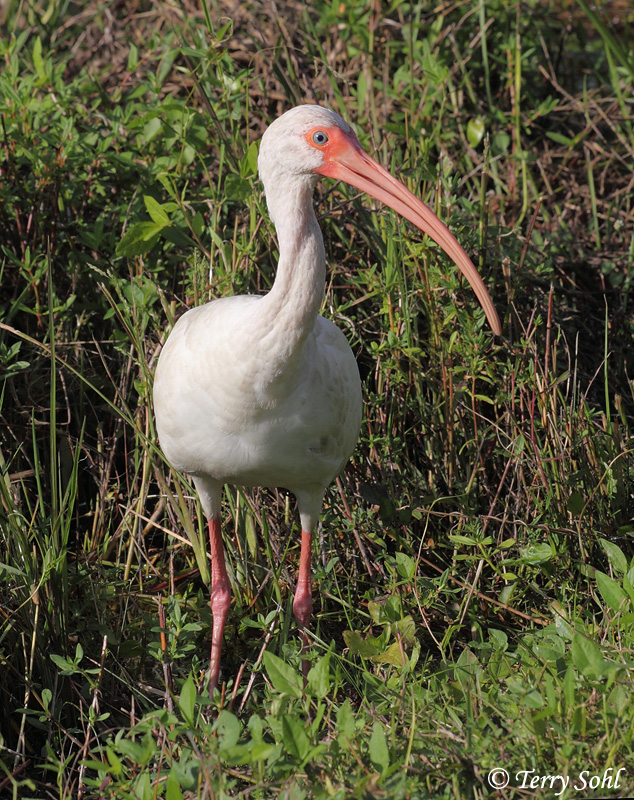 |
| Glossy Ibis | Glossy Ibis | White Ibis | White Ibis |
Conservation Status
Has increased in number since the 1970s, and is expanding in range. Previous declines are attributed to DDT and other pesticides, but populations have rebounded strongly since the ban of such chemicals. The IUCN considers the White-faced Ibis to be a species of "Least Concern".
Photo Information
April 25th, 2004 -- 4 miles west of Oldham -- Terry Sohl
Audio File Credits
- 1Gabriel Leite. Recorded in Brazil on November 22nd, 2019. Original recording and information from xeno-canto.
- 2Jeremy Minns. Recorded in Brazil on July 17th, 2004. Original recording and information from xeno-canto.
- 3Dan Lane. Recorded in Cameron Parish, Louisiana on April 13th, 2017. Original recording and information from xeno-canto.
