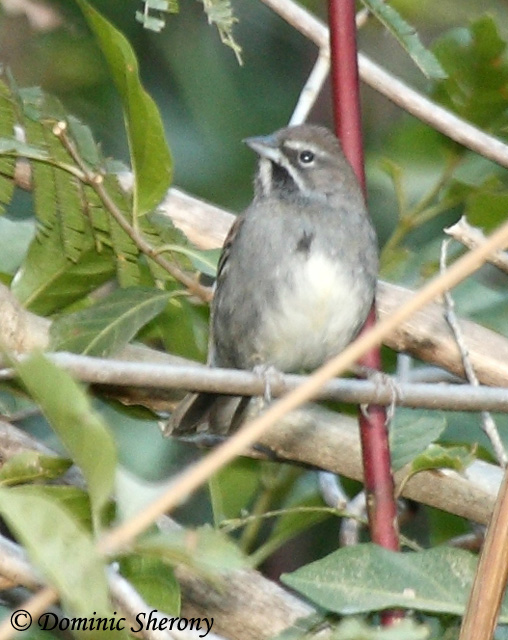
The Five-striped Sparrow is a species with a small range in western Mexico and far southern Arizona. They can be relatively common in their small geographic range, but observing the birds is another matter, as they generally forage in dense vegetation. They are most easily observed when the male perches in a relatively open location to sing his song in the spring. Five-striped Sparrows were unknown in the United States until the 1950s, when nesting birds were found in several locations in far southern Arizona. The birds may have expanded their range to the north in recent decades, or the preferred habitat and the birds' habits may have just made them an unseen presence in Arizona until "found" in the 1950s.
Habitat
Found in areas of dense shrubbery and ocotillo in the Arizona portion of their range, particularly where such vegetative cover is found on sloped hillsides. They use similar habitat as well as dry open woods in the Mexican part of their range.Diet
Feeds heavily on insects and other small invertebrates during the summer months. They will also feed on berries and seeds, with vegetative matter perhaps making up a larger portion of the diet during the winter months when insects are less available.Behavior
The Five-striped Sparrow is a secretive bird that spends much of its time concealed in dense thorn scrub and brushy canyon habitats. It typically forages on or near the ground, searching for seeds, insects, and other small food items among leaf litter and low vegetation. During the breeding season, males often sing from exposed perches, but the species is generally shy and difficult to observe.Nesting
The nest of a Five-striped Sparrow is a deep cup of grasses, placed in vegetative cover such as in a thick clump of grass, a dense shrub, or in other dense vegetation. The female usually lays 3 or 4 eggs and she alone incubates them. When the eggs hatch, both parents help to feed the young. The young leave the nest after about 10 days, but typically are continued to be cared for by the parents for at least two weeks after fledging.Song
The Five-striped Sparrow has a clear, musical song consisting of a series of rich whistles and slurred notes delivered from exposed perches during the breeding season. Males sing frequently to establish territories and attract mates. The species also gives sharp chip notes and short calls used for contact and alarm when moving through dense vegetation.Migration
Considered a permanent resident throughout its normal range. However, those found in southern Arizona typically are much more common in summer than in winter, indicating that some migration of the northern populations may occur.Interactive eBird Map
Click here to access an interactive eBird map of Five-striped Sparrow sightingsSimilar Species
Sage Sparrow: The Five-striped Sparrow is larger and much more boldly patterned, with a striking black-and-white facial pattern and five distinct dark head stripes. The Sagebrush Sparrow has a plainer face, lacks the bold black facial markings, and is typically found in open sagebrush habitats rather than dense thorn scrub.
Black-throated Sparrow: The Five-striped Sparrow has prominent white superciliary stripes and multiple dark crown stripes, creating a strongly striped head pattern. The Black-throated Sparrow is distinguished by its bold black throat and face pattern bordered by white, but lacks the Five-striped Sparrow's heavily striped crown and facial markings.
