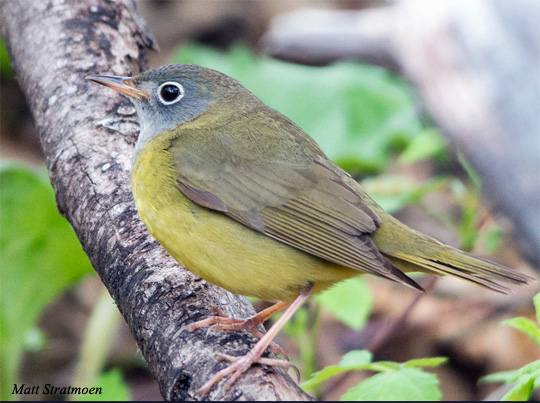
A shy warbler of dense thickets and undergrowth, the Connecticut warbler is generally quite difficult to observe. They also are among the last warblers to migrate in the spring, and the earliest to migrate in the fall, and thus often go unnoticed. Connecticut Warblers forage with a slow and deliberate walk along the ground, a characteristic that by itself can be used to differentiate it from the similar Mourning Warbler.
Habitat
Often found in forested bogs and other wetlands on its summer breeding grounds. Generally found low in dense undergrowth or shrubby areas during migration through the state.
Diet
Primarily insects. Difficult to observe, but has been seen feeding on caterpillars, spiders, snails, raspberries, and seeds.
Behavior
Primarily forages ont he ground, walking around through leaf litter, flipping over leaves in search of insects and other prey. They will also forages low in trees and undergrowth, walking along branches, searching for insects.
Breeding
Non-breeder in South Dakota
Song
Connecticut Warbler song
Migration
Summers in central and southern Canada, and near the Great Lakes. Winters in South America.
Similar Species
Mourning Warbler , MacGillivray's Warbler
Conservation Status
Generally stable, although some indications of decline. Difficult to observe, populations estimates are sketchy at best.
Photo Information
Photo by Matt Stratmoen - Licensed under Creative Commons Attribution NonCommercial NoDerivs 2.0 Generic license.
Interactive eBird Map
Click to access the eBird species page for Connecticut Warbler
