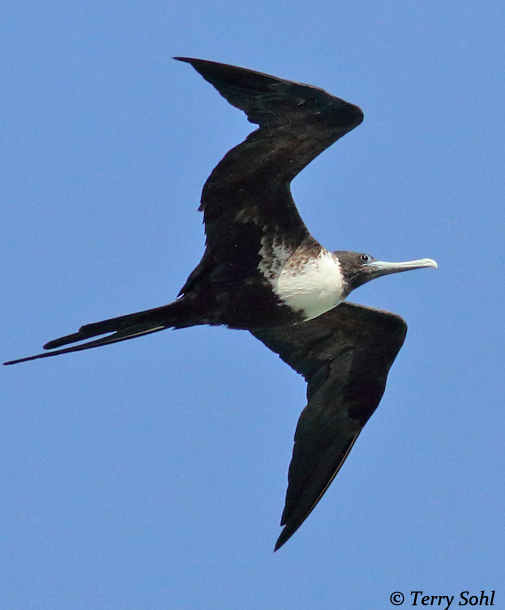
ID Keys: Extremely long, pointed wings for body size, forked tail (usually
closed in flight, very long bill, all black (adults)
The
Magnificent Frigatebird is characterized by extremely long, pointed wings, the
longest wings for any bird in comparison to overall body weight. They are
most commonly seen soaring, dipping down close to the water's surface to pick up
food items, but never landing or swimming in the water. They are primarily
a coastal species, but on occasion can be found inland. The male has a
dramatic thraot sac which is inflated during mating display (see photo to the
right). The species is considered "hypothetical" in South Dakota, given that
rare inland sightings have occurred in nearby states.
Habitat
Typically found along the coastline, or less
often further out to sea. They can also rarely be found over inland water
bodies.
Diet
The Magnificent Frigatebird feeds mainly on fish and squid taken from the ocean surface, often snatching prey while flying low over the water. It is also famous for harassing other seabirds such as boobies and terns until they drop or regurgitate food, which the frigatebird then catches in midair.
Behavior
Spends most of it's time putting it's long
wings to good use, soaring in flight, dipping down to the surface of the water
to grab food items. Even when feeding over land, it will typically grab
items in flight rather than land. It is highly aerial and agile, often chasing other seabirds to steal food and gathering in loose flocks around fishing activity or coastal nesting colonies.
Nesting
Non-breeder in South Dakota. In range, the Magnificent Frigatebird nests colonially on remote islands, mangroves, shrubs, or low trees in tropical coastal regions. Males attract females by inflating their bright red throat pouches, after which the pair builds a loose stick nest where a single egg is laid and both parents help care for the chick.
Song
Usually silent, except when on their breeding
grounds. Males in display (such as photo above) give some repeated
chattering sounds, along with bill clicking sounds.
Migration
Not typically migratory, although individual birds
will wander widely. Birds found wandering far from breeding colonies are
typically dispersing juveniles. They are almost always found in warmer waters.
Great Frigatebird (a very rare visitor to North
America). The Magnificent Frigatebird is very similar to the Great Frigatebird but adult males of the Magnificent Frigatebird typically show a greenish-purple sheen on the upperparts rather than the more purplish gloss of Great Frigatebirds. Females of the Magnificent Frigatebird have a black throat and a more restricted white breast patch, while female Great Frigatebirds usually show more extensive white extending onto the throat and belly.
Conservation Status
The Magnificent Frigatebird is generally considered a species of low conservation concern, with a broad range across tropical and subtropical coastal regions of the Americas. However, some nesting colonies are vulnerable to disturbance, coastal development, pollution, severe storms, and reductions in marine food availability. The IUCN considers the Magnificent Frigatebird to be a species of "Least Concern".
Photo Information
June 2015 - U.S. Virgin Island (St.
John's) - Terry Sohl