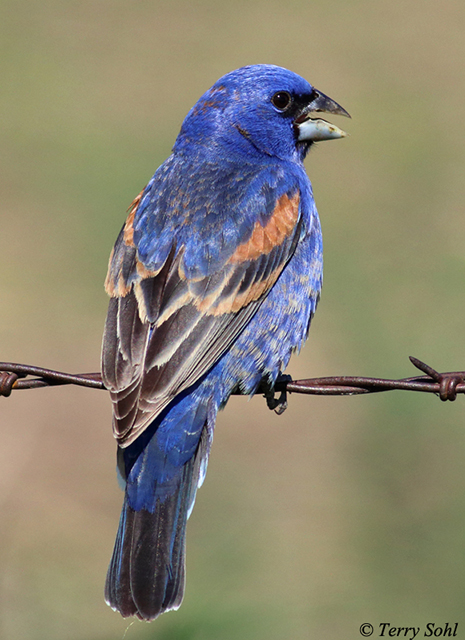
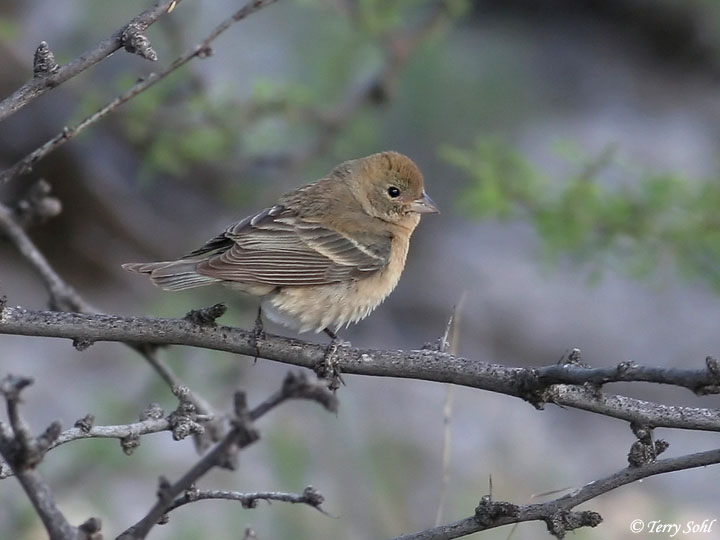
The Blue Grosbeak is a denizen of thickets and other patches of vegetation in semi-open areas. South Dakota is on the northern fringe of its breeding range, and Blue Grosbeaks are generally the most common in the southern part of the state. Like many species, they have expanded their range to the north in recent decades, likely in response to a changing climate.It is distinguished from the similar Indigo Bunting by its larger size, larger and thicker bill, and rust-colored wing-bars. Females lack any blue coloring, with a warm brown coloring overall, but they share the large chunky bill.
Habitat
Prefers brushy low growth for breeding, preferably in semi-open country. This can include fence lines, brushy fields, streamside thickets, hedgerows, and woodland edges. They are often seen foraging along fence lines in South Dakota, dashing into nearby cover when flushed.
Diet
The summer diet consists of many insects and spiders, as well as seeds and occasionally snails. The winter diet consists of a greater proportion of seeds and waste grain, along with insects.
Behavior
Does much of its foraging on the ground, grabbing insects and seeds from the ground or from nearby foliage, or flying up to capture insects stirred up by its movements. They will also forage in brush and undergrowth, and low in trees.
Nesting
June through August in South Dakota, with nesting sometimes lasting later into the summer than for many passerines. The nest of a Blue Grosbeak is placed low in a shrub or small tree, typically within 8 feet of the ground. The nest itself is a cup constructed of weeds, twigs, roots, strips of bark, and other vegetative material that may be available. They will also sometimes use manmade materials such as string or cloth. The female lays between 3 and 5 eggs, and she alone incubates them. The young hatch after only 12-13 days, and fledge from the nest after 10-14 days. Given their preference for semi-open habitats, they are a very frequent victim of Brown-headed Cowbird parasitism.
Song
The song of a male Blue Grosbeak is a musical warbling, while they also have multiple buzzy or metallic calls.
- Click here to hear the song of a Blue Grosbeak1
- Click here to hear a call of a Blue Grosbeak as it since on a fence line2
- Click here to hear the chink and buzzy calls of a male Blue Grosbeak3
Migration
Summers throughout much of the southern three-fourths of the U.S. Winters in Mexico and southward into South America.
Interactive eBird Map
Click to access an interactive eBird map of Blue Grosbeak sightings
Similar Species
Blue Grosbeak are structured differently, but with their bluer than blue (not sadder than sad!!) plumage, they could potentially be confused with the following two bunting species (click here for more ID tips for these birds).
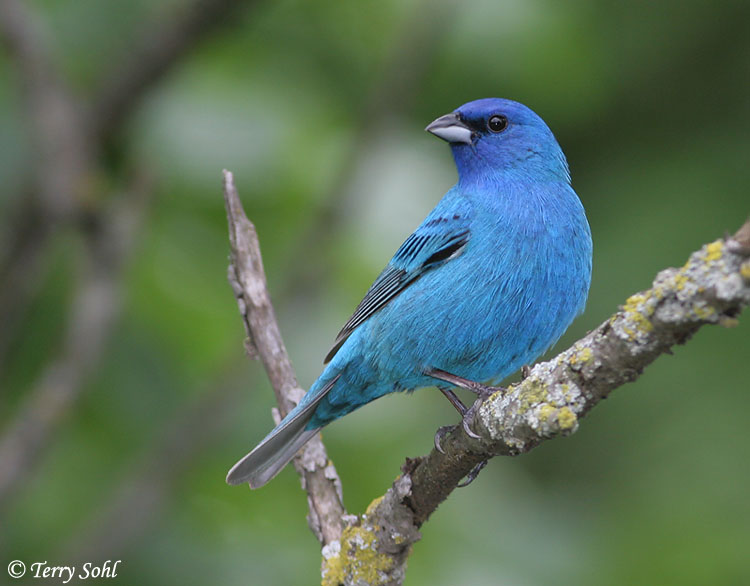
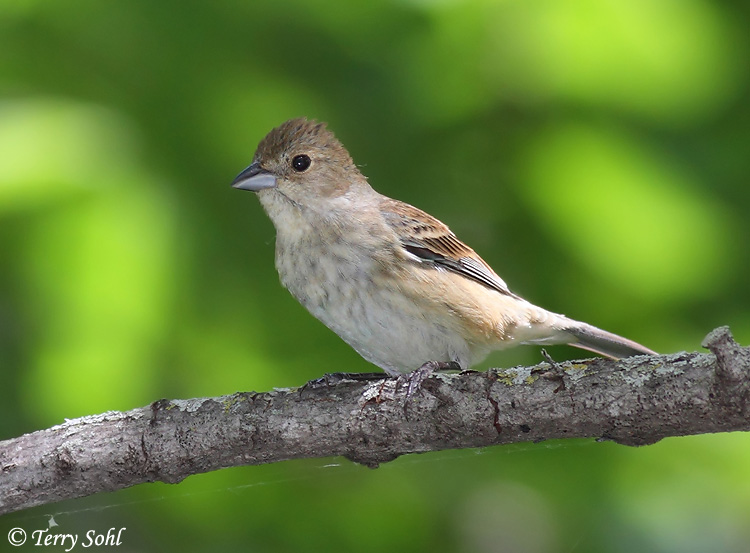
- Indigo Bunting - Indigo Buntings, like Blue Grosbeaks, are summer visitors to South Dakota. Their habitat preferences are a little different, with Blue Grosbeaks typically liking shrubby areas in open country, and Indigo Buntings preferring a little more forest cover, but they are sometimes found in the same "edge" habitats. Indigo Buntings are smaller than Blue Grosbeaks, with a much smaller bill than the large, robust bill of a Blue Grosbeak. The blue on a male Indigo Bunting is a little different tone (touch lighter?) than that of a Blue Grosbeak, and they lack the rusty wing patches of a Blue Grosbeak. Females of the two species are also similar, but again, overall size and bill structure are diagnostic.
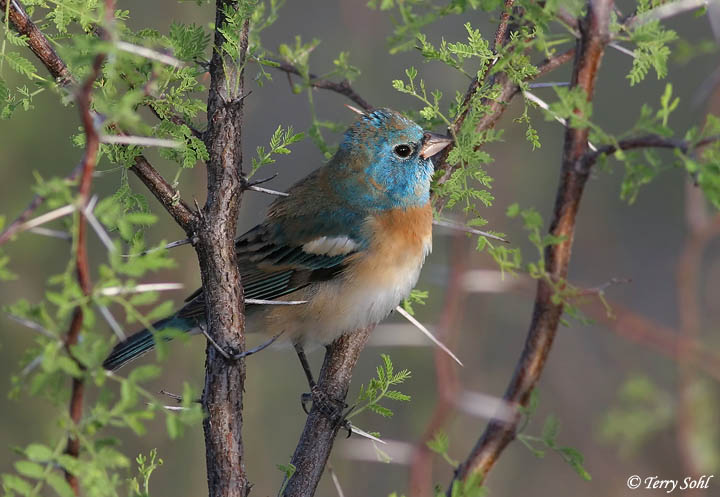
- Lazuli Bunting. - Lazuli Buntings are primarily found in western South Dakota. They are smaller than Blue Grosbeaks and have smaller bills. Male Lazuli Buntings are a sky blue (deeper blue on male Blue Grosbeak), and have light underparts with a buffy chest (all blue on a Blue Grosbeak). Lazuli Bunting males also have white/buff wing bars, as opposed to the chestnut-colored ones on a Blue Grosbeak male. Female Lazuli Buntings are again smaller than female Blue Grosbeaks, with a smaller bill, but they also have a paler, buffy underside compared to the more even brown tones on the plumage of a female Blue Grosbeak.
 |
 |
 |
 |
| Indigo Bunting (male) | Indigo Bunting (female) | Lazuli Bunting (male) | Lazuli Bunting (female) |
Bird Feeders
Will attend feeders for many seeds and grains.
Conservation Status
Breeding populations have expanded northward recently. There are also some indications that they've increased in numbers throughout much of their historical range. The IUCN currently considers the Blue Grosbeak to be a species of "least concern".
Further Information
- eBird - Blue Grosbeak
- Audubon Field Guide - Blue Grosbeak
- Cornell Lab of Ornithology - All About Birds: Blue Grosbeak
Photo Information
May 30th, 2015 - Kingsbury County, South Dakota - Terry Sohl
Audio File Credits
- 1Manuel Grosselet, XC428726. Accessible at www.xeno-canto.org/428726
- 2Jerald R, XC327255. Accessible at www.xeno-canto.org/327255
- 3Andrew Spencer, XC33603. Accessible at www.xeno-canto.org/33603
