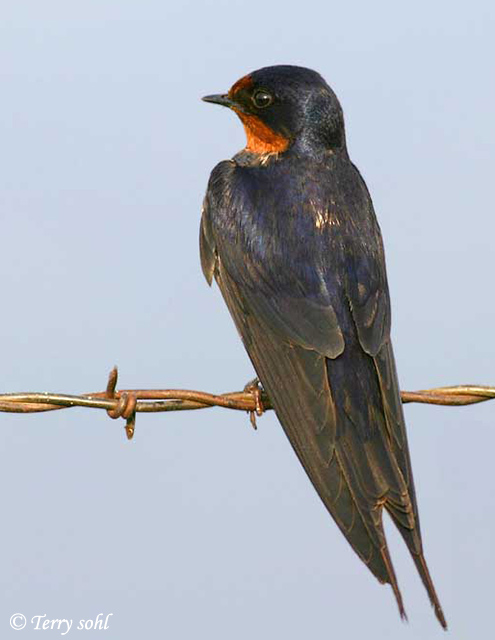
Barn Swallows are very common summer resident, not only in North America, but in much of the Eastern Hemisphere as well. They also are found in the Southern Hemisphere, as that's where many birds spend the North American winter. They are very comfortable around human activity, and now primarily nests in and around buildings and bridges. They have probably greatly increased in numbers due to man-induced land cover change.
Habitat
Diet
Behavior
Catches and consumes nearly all insects in the air, often flying low over open fields or water bodies. They will also feed on the ground or in vegetation, but only in rare instances of very bad weather.
Nesting
Interactive eBird Map
Song
The song of a Barn Swallow is a jumble of warbling, twittering notes. Various calls include a churee, often given when alarmed or threatened, or a shorter cheep that may be a contact call.
- Click here to hear the call of a male Barn Swallow1
- Click here to hear alarm calls of a pair of Barn Swallows2
- Click here to hear the bubbling songs of a Barn Swallow3
Migration
Feeders
As insect eaters, Barn Swallows won't come to feeders for typical food items. However, they will come from ground up egg shells or ground up shellfish shells. It is thought that these items either provide the birds with needed calcium. They may also help the birds in digestion.
Similar Species
Barn Swallows could potentially be confused with the following species. Note that each of these species lack the deeply forked tail of the Barn Swallow (very noticeable in flight).
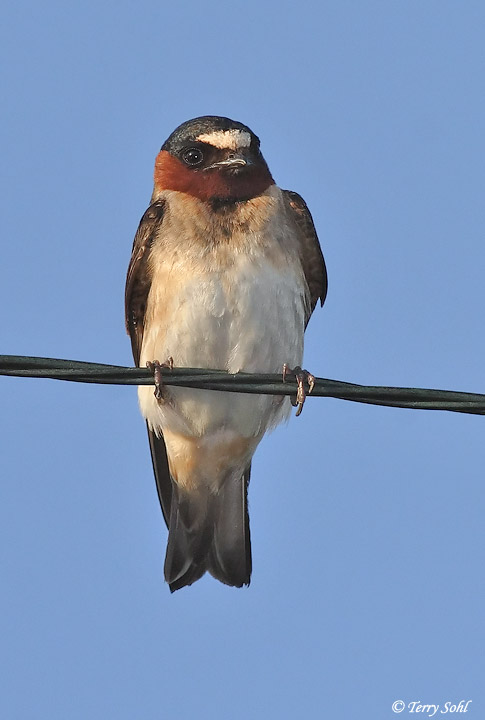
- Cliff Swallow - Cliff Swallows have the same deep bluish upperparts and the rust-colored throat of a Barn Swallow. However, Cliff Swallows have a light spot on their forehead (rusty on a Barn Swallow), and have a light-colored rump (same deep blue color on the rump of a Barn Swallow as the rest of its back).
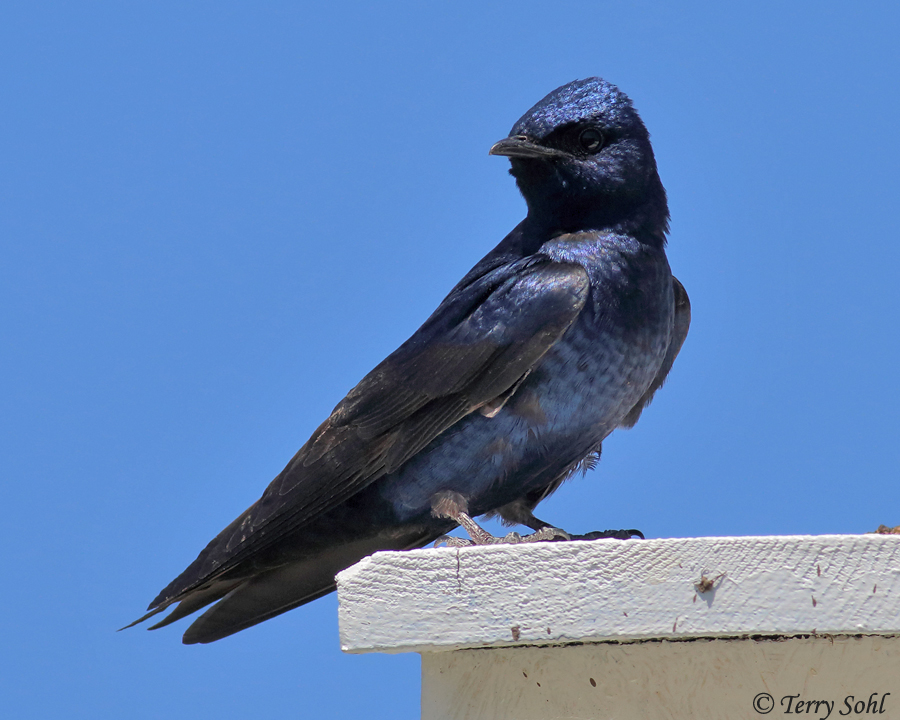
- Purple Martin -Male Purple Martins are easily differentiated from Barn Swallows given their complete, glossy purplish-blue plumage. Female Purple Martin's have a lighter underside that could cause confusion with a Barn Swallow, but they tend to be a dingy gray, as opposed to the creamy-colored or rusty underparts of a Barn Swallow. All plumages of Purple Martin lack the rusty throat of a Barn Swallow.
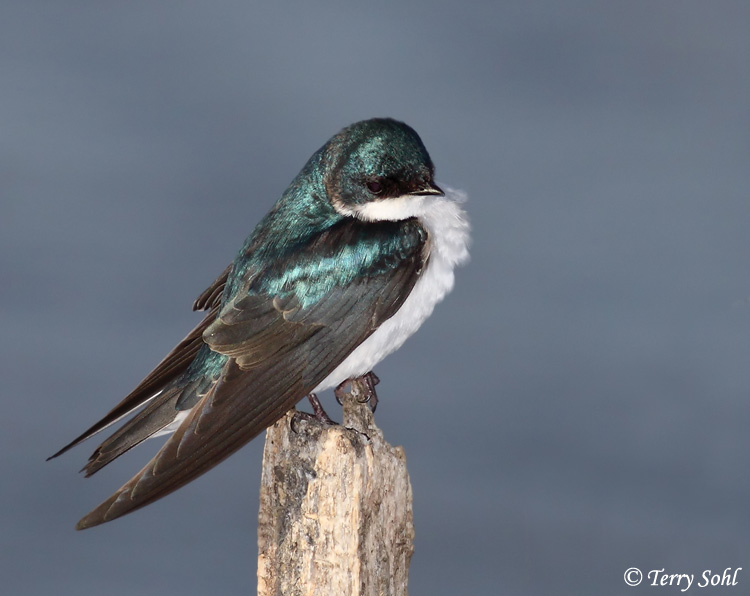
- Tree Swallow - Tree Swallows have a glossy blue upperparts that could be reminiscent of a Barn Swallow. However, they lack the rusty forehead and throat of a Barn Swallow, lack the forked tail, and have more white underparts rather than the creamy or rusty underparts of a Barn Swallow.
- Violet-green Swallow - Violet Green Swallows do have glossy green and purple upperparts, compared to the bluer upperparts of a Barn Swallow. They lack the rusty throat and forehead of a Barn swallow and are bright white below, rather than creamy or rusty.
 |
 |
 |
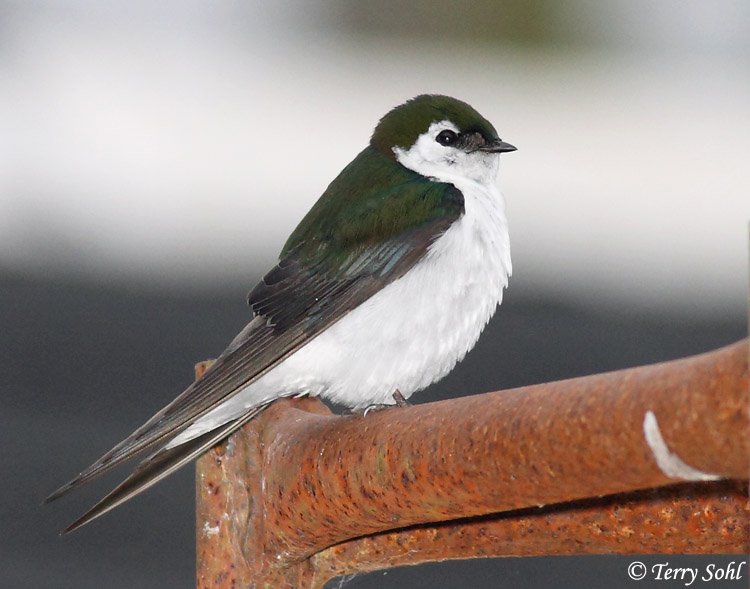 |
| Cliff Swallow | Purple Martin | Tree Swallow | Violet-green Swallow |
Conservation Status
Further Information
- eBird - Barn Swallow
- Audubon Field Guide - Barn Swallow
- Cornell Lab of Ornithology - All About Birds: Barn Swallow
Photo Information
Audio File Credits
- 1Sue Riffe. Recorded in Morgan City, Colorado on August 8th, 2020. Original recording and information available from xeno-canto.
- 2Simon Elliott. Recorded in York, England on July 3rd, 2020. Original recording and information available from xeno-canto.
- 3Simon Elliott. Recorded in Pembrokeshire, Wales on May 20th, 2016. Original recording and information available from xeno-canto.
