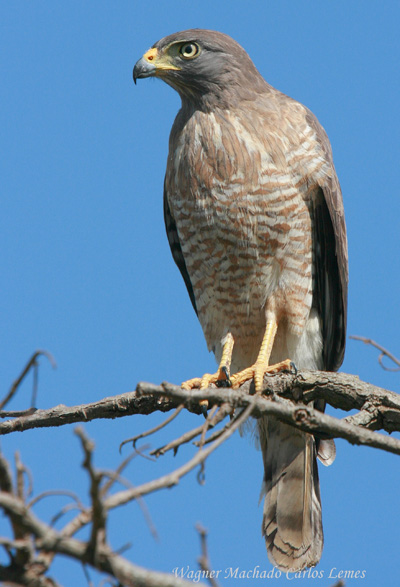
ID Keys: Slim appearance, dark upperparts, barring on the belly,
dark tail with 3 or 4 grayish bands,
The
Roadside Hawk is a common sight throughout much of the tropical Americas.
Their range extends from northern Mexico, all the way through much of South
America. Well-named, they are indeed often found near roadsides,
particularly on roads that cut through forested areas. The species is
only a rare visitor to the United States, with occasional visits to south
Texas.
Habitat
Roadside Hawks can be found in a variety of forested habitats in tropical America. They are most often found near forest edges and forest clearings, and tend to avoid dense unbroken forested lands. They also avoid open lands without forest stands.
Diet
Feeds on a variety of small creatures, particularly large insects, but also including rodents and other small mammals, birds, lizards, snakes, frogs, and fish.
Behavior
Hunting is mostly done by looking for prey from a perch, typically at relatively low to moderate heights. Once a prey item is spotted, the Roadside Hawk swoops down to quickly capture it. They also have learned to use natural and man-made fires to their advantage while hunting, as they hunt the fire edge and capturing fleeing prey.
Nesting
Nests are constructed from medium- to high-levels in the forest canopy. The nest consists of a stick platform, lined with leaves, moss, or tree bark. The female incubates the eggs, with the male feeding the female through the incubation period. Both parents will help to raise and feed the young.
Song
Call is a high-pitched, drawn out screaming. A very vocal species, they also make many harsh barking calls while in flight.
Migration
Considered a permanent resident throughout most of its range.
Interactive eBird map
Click here to access an interactive eBird map of Roadside Hawk sightings