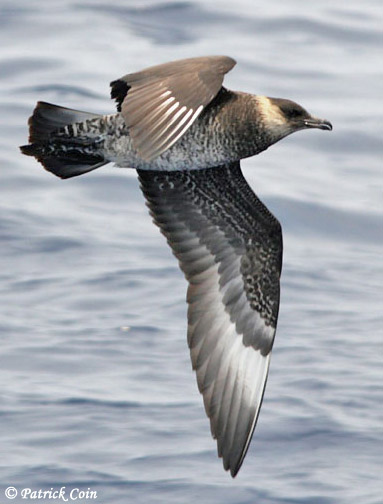
ID Keys: 2 central tail feathers extend well past other tail
feathers, heavy billed, black head, body plumage often quite
variable.
A bird of the Arctic
tundra and open ocean, seen only rarely inland and very rarely in South Dakota.
Adult birds are readily identifiable by the two blunt central tail feathers that
extend well past the rest of the tail. Pomarine Jaegers are
predatory birds, feeding heavily on lemming populations in their northern
haunts, while feeding primarily on fish during the non-breeding season on
the open ocean.
Habitat
Spends summer breeding season on Arctic tundra. Spends winters over open ocean, usually staying off-shore, and very rarely found inland.
Diet
Feeds very heavily on lemmings on its breeding grounds. Breeding success often is dependent on lemming populations. At sea, primarily eats fish. Will also eat birds, eggs, insects, carrion, and refuse.
Behavior
On the summer breeding grounds, feeds by flying slowly and hovering over the landscape, swooping down to capture prey when spotted. At sea, feeds by dipping down to the ocean's surface while in flight. They are also agile and strong fliers, capable of catching small birds in flight.
Breeding
Non-breeder in South Dakota
Song
Generally silent except on Arctic breeding grounds.
Migration
Summers in the high Arctic. Winters off U.S. coasts as well as elsewhere in the world. The Pomarine Jaeger is very rare inland, but could be seen in nearly any season.
Interactive eBird Map
Click here to access an interactive eBird map of Pomarine Jaeger sightings
Similar Species
Parasitic Jaeger , South Polar Skua , Long-Tailed Jaeger
Conservation Status
Populations appear to be stable overall. However, large local population fluxes often occur in conjunction with availability of primary summer prey species, the lemming.
Photo Information
Photo taken June 23rd, 2007, off the coast of North Carolina -- Copyright, Patrick Coin