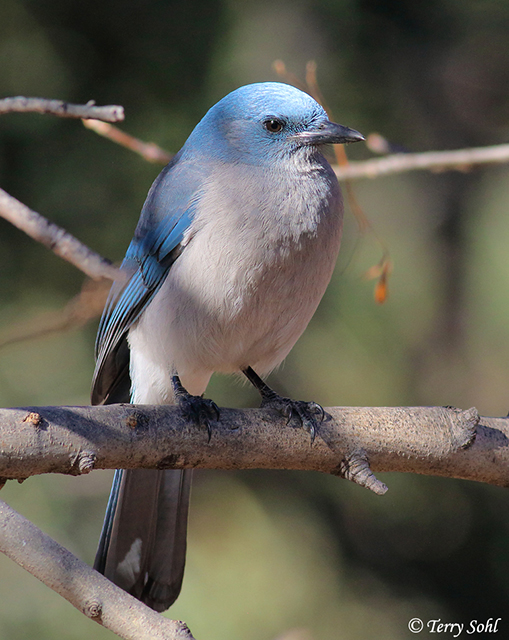
ID Keys: Bluish upperparts, gray underparts, mantle typically is
grayer in tone than rest of upperparts
The
Mexican Jay is found throughout much of Mexico, with a range that just
crosses into the United States in southeastern Arizona, southwestern New
Mexico, and southwestern Texas. Very social birds, Mexican Jays have complex
social structures, particularly during the summer breeding season, when
nesting groups cooperatively assist nesting parents in raising the young.
Even a single nest may contain eggs of mixed parentage.
Habitat
Found in open oak and mixed-oak
woodlands, generally in canyons up to moderate elevations on mountain
slopes.
Diet
Omnivorous, feeding on both plant and animal
matter. Feeds heavily on acorns and pine seeds when available, storing
them in caches in the ground for later retrieval. Also will feed on
many insects in the summer, with other food items including small
vertebrates such as small lizards or snakes, bird eggs, and fruits or
berries.
Behavior
Complex social behavior during the
breeding season, as discussed elsewhere on this page. Uses a variety
of foraging techniques depending upon food availability, foraging from the
ground to relatively high in the canopy.
Nesting
The nest of a Mexican Jay is a large cup
of twigs and sticks, lined with softer plant material, and placed anywhere
from relatively close to the ground to 50 feet or more up in the canopy.
The female alone incubates the eggs, but while incubating, other individuals
in the nesting group bringing food to the female. Both parents, as well as
other members of the nesting group, help to feed the young.
Song
The Mexican Jay is a noisy, highly social bird that gives a variety of rich chatters, nasal calls, and harsh scolding notes while family groups move together through mountain woodlands. Its most typical sounds are scratchy shreeh calls and rattling calls that keep flock members in contact.
Migration
Considered a permanent resident
throughout their range, with little movement from breeding areas.
Similar to California Scrub-Jay,
Pinyon Jay. The Mexican Jay is a somewhat larger, softer-colored blue jay of southwestern mountain canyons, appearing more uniformly blue-gray and lacking the crisp white throat and bold breast band of the California Scrub-Jay. Compared with the Pinyon Jay, Mexican Jay has a shorter, stouter bill, richer blue upperparts, and a more patterned face, while Pinyon Jay looks plainer, dustier blue overall and usually travels in larger, tighter flocks across open pinyon-juniper country.