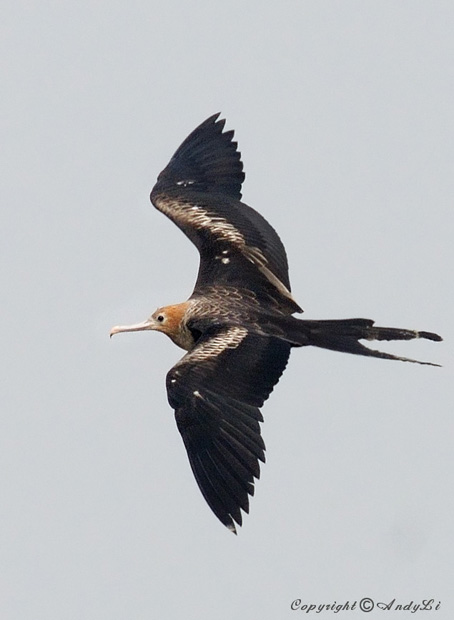
ID Keys: Dark plumage overall, long deeply forked tail, females have
white collar and breast, males white patch on underwing, juveniles
have brownish head
The
Lesser Frigatebird is a small Frigatebird of the southern Hemisphere, where
they are primarily found in the warmer waters of the Indian and Pacific
Oceans. They are only extremely rare vagrants to North America, but
the sightings of the bird have been scattered and unusual. A sighting
in Michigan in 2011 was largely attributed to the effects of Hurricane
Katrina pushing the bird far inland. Another sighting was made off the
coast of Maine, unusual not only for the distance from the species' usual
range, but because of it's appearance over relatively cold waters.
However, the most unusual sighting of the species in North America was an
emaciated bird found in the dry habitat of Bighorn County in Wyoming in
2003. The female was still alive when found, but only lived for an
hour. At the time, it was thought to likely be a Magnificent
Frigatebird, given that species' occasional sightings far inland in the
United States. However,
analysis of photos of the bird after its death (and disposal) indicate the
bird was a very lost Lesser Frigatebird.
Habitat
Found on a number of breeding colonies in
the warmer waters of the Pacific and Indian Oceans, and a few areas off the
coast of Brazil in the Atlantic Ocean. They typically nest on tropical
islands with mangroves or bushes.
Diet
Feeds mostly on squid and fish, especially
flying fish. They will also attempt to force other seabirds to disgorge
their prey, catching it in mid-air. Also sometimes feeds on chicks of
other seabirds, and will follow fishing vessels for scraps.
Behavior
Very clumsy on land and incapable of
taking flight from the water, Frigatebirds spend most of their time in
flight. Foraging is also done in flight, as they fly above the ocean's
surface and drop down to grab prey in flight, when prey is spotted. As noted
above, will also attempt to steal food from other seabirds.
Nesting
The Lesser Frigatebirds nests in small
trees or shrubs, building a platform nest of sticks and branches. A
single egg is laid, and both parents held to incubate it. Both parents
tend to the young after hatching, a period that can last many months.
Song
The males have a variety of calls and a bill
rattling during their courtship displays, where the red air sac is inflated
as with other Frigatebird species.
Migration
Mature adults typically stay near
breeding colonies even outside of the breeding season. However,
juvenile birds and some non-breeding adults disperse widely across the
tropical oceans.