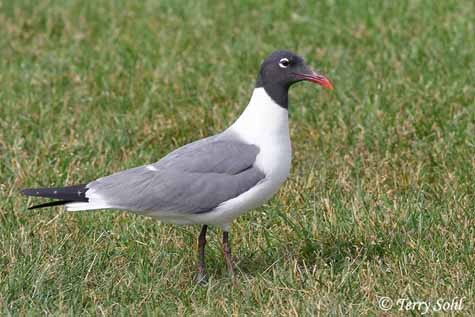
ID Keys: Black head, white neck and underparts, dark gray back, black
wingtips.
Named
for its well-known laughing call, the Laughing Gull is a common sight (and
sound) of the Atlantic and Gulf coasts of the United States. They have
the unusual habit of stealing food from Brown Pelicans, landing on their
heads and stealing fish from the Pelican's large pouch. Rarely seen
inland, the Laughing Gull is a rare visitor to the state.
Habitat
Generally only found near coastal regions, only rarely
venturing very far inland except in Florida and around the Salton Sea.
On coasts, primarily found around beaches and salt marshes.
Diet
Small fish, insects,
crustaceans, earthworms, eggs and young birds, refuse.
Behavior
Forages by walking, wading, or swimming,
and occasionally by plunge-diving or dipping from the surface in flight.
Breeding
Non-breeder in South Dakota. On their breeding grounds, Laughing Gulls breed in large colonies on sandy islands, marshes, and protected coastal beaches. Pairs form in spring through display flights and calling, then build shallow nests of grasses where the female lays 2–4 eggs. Both parents incubate the eggs for about 3–4 weeks and fiercely defend the downy chicks after hatching. Young birds leave the nest quickly but stay nearby, fed by both adults until fledging at about five weeks.
Summers along Atlantic and Gulf Coasts. Populations along northern part
of Atlantic Coast move south in the fall, while southern U.S. populations are
generally permanent residents. A true coastal bird that is only very
rarely seen inland.