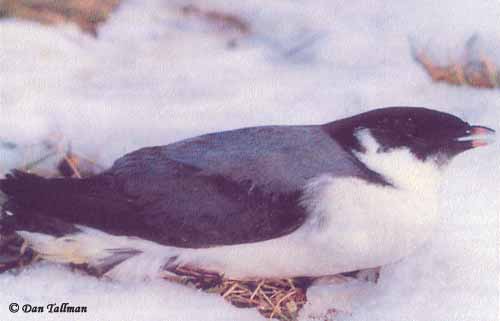
The Ancient Murrelet is the only one of the Auks to ever have been identified in South Dakota. Normally found along the southern coastline of Alaska and of western Canada, small numbers of these birds may be blown inland by early winter storms each year, normally in October or November. They are named for the gray coloring on the back which is said to resemble an old woman's shawl.
Habitat
During summer breeding season, they nest in burrows on islands possessing a good vegetation cover. At all other seasons, they are found on cool waters normally around the edge of the continental shelf, although they do sometimes feed close to shore.
Diet
Small fish and crustaceans (primarily euphausiid shrimp) make up the majority of the diet.
Behavior
Forages by diving and swimming underwater for prey. Males will sing from the tops of trees during the breeding season, an unusual sight for a seabird such as this.
Interactive eBird Map
Click to access an interactive eBird map of Ancient Murrelet sightings
Song
Gives soft whistles and chirps during the breeding season.
Migration
Can be found all year long along the Aleutians and the southern coast of Alaska, southward to the coast of British Columbia. In the winter, some move as far south as the California coast.
Similar Species
Marbled Murrelet, Xantus's Murrelet
Status
Populations have been in decline for many years. Foxes, raccoons, and rats that have been purposely or accidentally introduced on breeding islands have completely wiped out breeding populations in some locations.
Further Information
- eBird - Ancient Murrelet
- Audubon Field Guide - Ancient Murrelet
- Cornell Lab of Ornithology - All About Birds: Ancient Murrelet
Photo Information
Photo courtesy of Dan Tallman.
